


Latest MPA news & sightings
July 2025
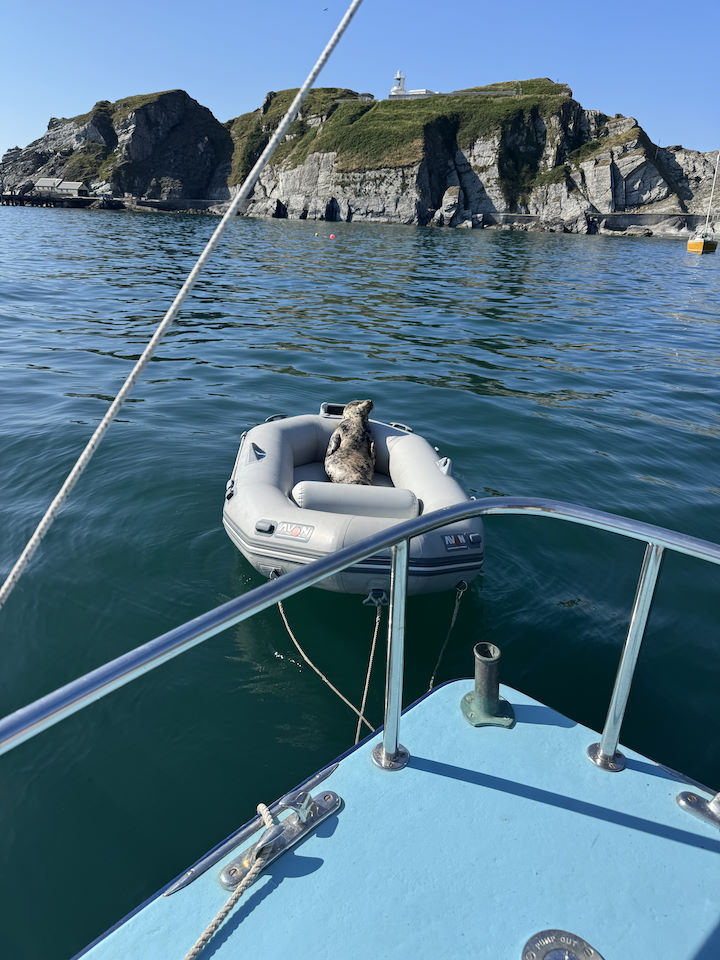 This is the life! © Martin Barrett
This is the life! Lundy is such a laid-back place there’s no restrictions on where seals choose to sun themselves. Martin Barrett was amazed to find a young seal had managed to find its way on board his boat’s tender and to stick around long enough to be photographed!
May 2025
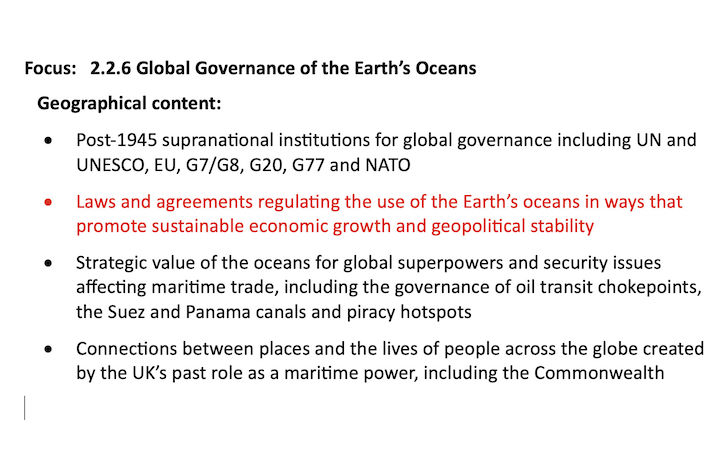
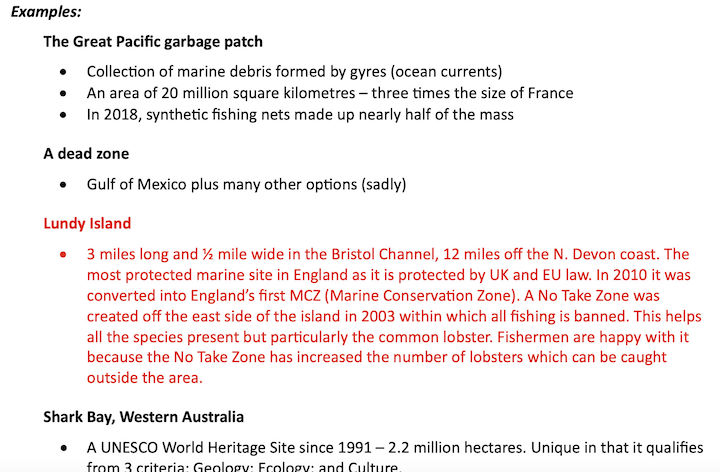
As part of the A Level Geography syllabus this year (2025) for Year 13 students in England (EDUQAS Examination Board), one topic under ‘Global Governance of the Earth’s Oceans’ is ‘Laws and agreements regulating the use of the Earth’s oceans in ways that promote sustainable economic growth and geopolitical stability’.
Of the two options for possible study, Shark Bay in Western Australia is one and the other is the No Take Zone within the Lundy MPA in SW England!
It’s great that our efforts are being recognised and merit international significance.
19 April 2025
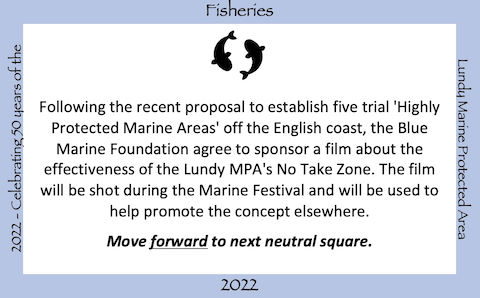
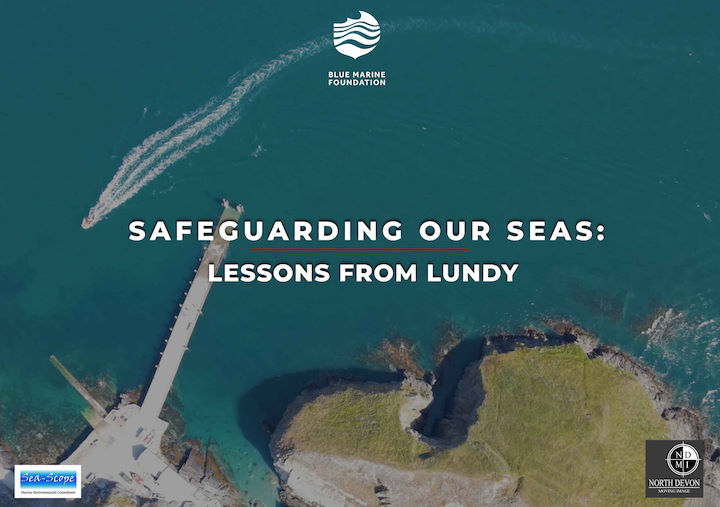 Title screen of Safeguarding Our Seas film
A shortened version of a documentary film shot at Lundy as part of the Marine Festival in 2022 was selected to be screened at the Edinburgh Conservation Film Festival on 19th April 2025. The 12 minute film, an edited version of the 30 minute Safeguarding Our Seas: Lessons From Lundy, was just one of six Conservation Documentaries to be shown during the 90 minute screening.
The film documents the impact which the No Take Zone has had, since its establishment in 2003, on the population of common lobsters and asks whether this concept could be rolled out elsewhere. Further information about the No Take Zone can be found here; the 12 min. version of the film can be viewed here; the 30 min. version of the film can be viewed here on Youtube.
28 February 2025
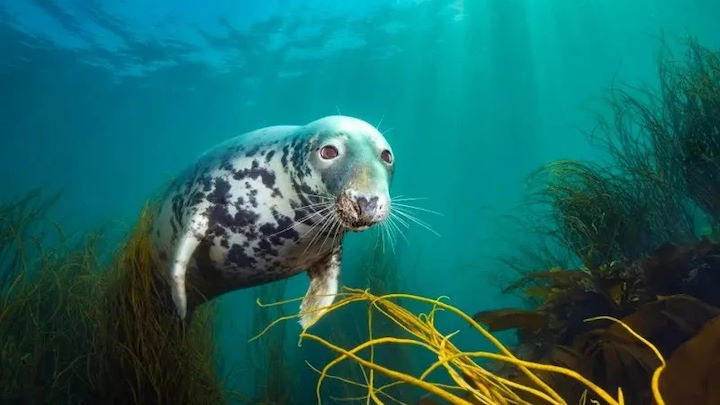 The image of The curious seal by David Alpert was taken at Lundy during the summer of 2024
July 2024
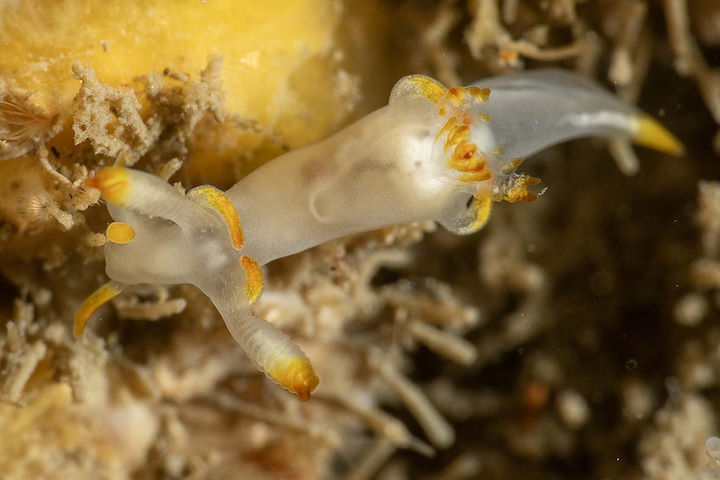 Trapania tartanella © Rollin Verlindee
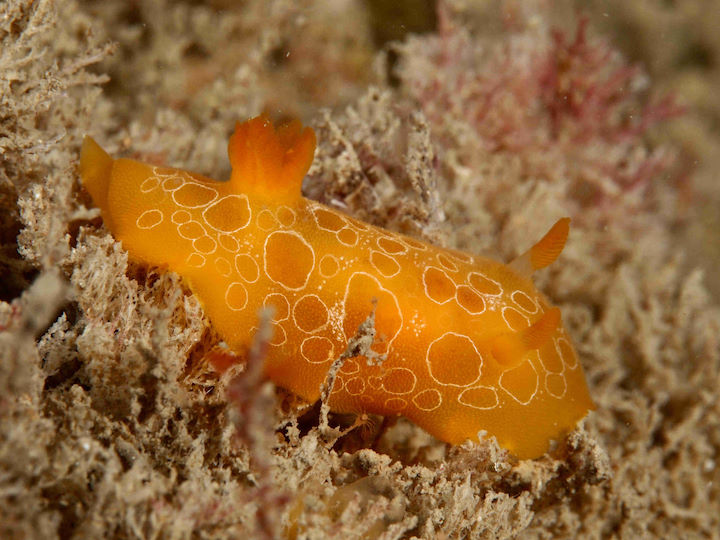 Gargamella rosi © David Kipling
A nationally rare sea slug Trapania tartanella was recorded for the first time at Lundy in July 2024 on the wreck of the MV Robert.
This nudibranch was first recorded in Britain from the Manacles, south Cornwall, in 2007, with a second record from Skomer Island, Pembrokeshire, in 2009. Further distribution is known from Galicia on the Atlantic coast of Spain and Portugal (Marine Life Encyclopedia).
This new nudibranch record comes hard on the heels of another first for Lundy from 2022 when the delightful Gargamella rosi was recorded from off The Battery on the west side of the island during the Marine Bioblitz.


